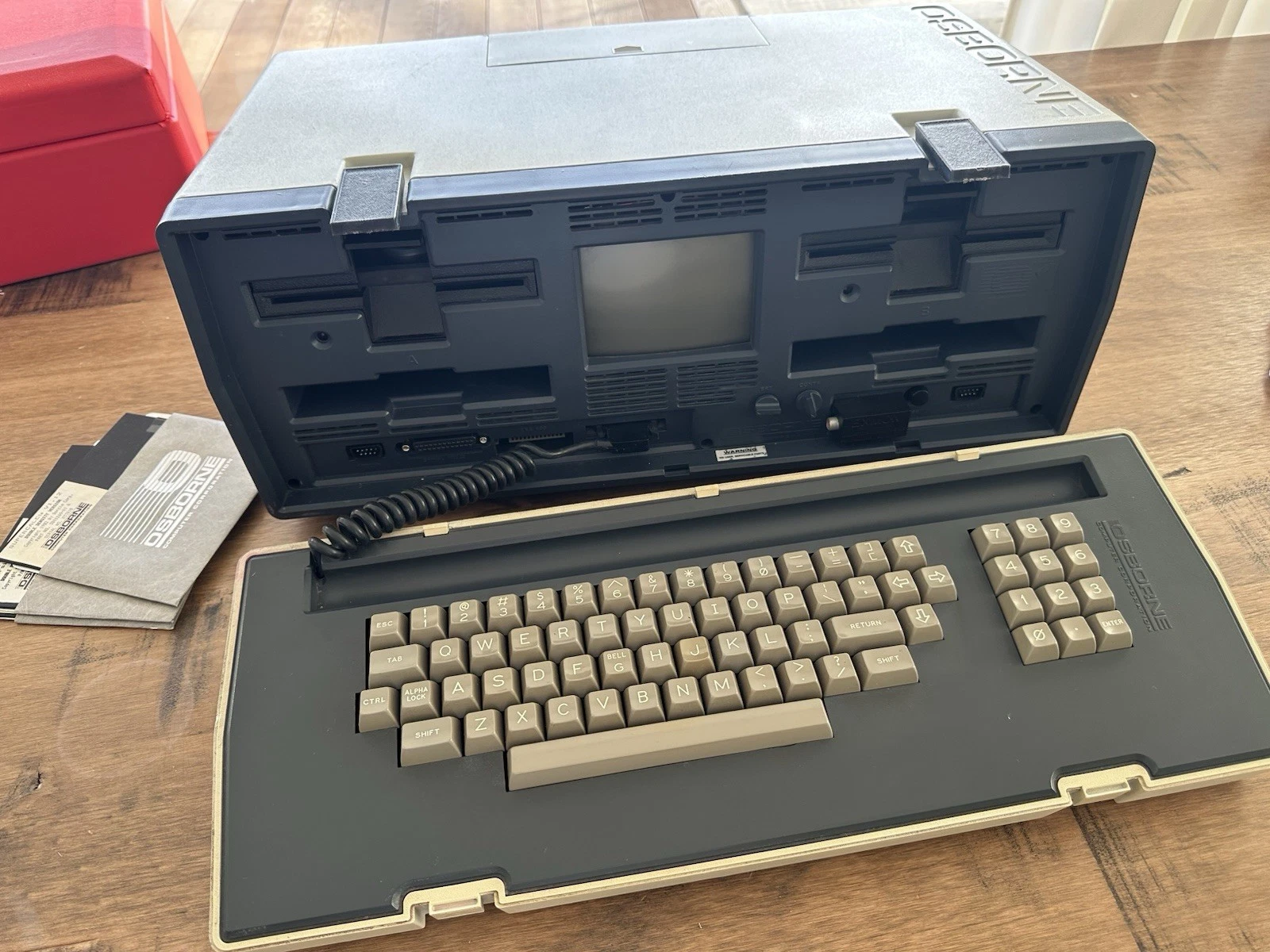
The Osborne 1 holds a pivotal place in computing history as the first commercially successful portable computer. It was released on April 3, 1981 (with shipments beginning around then or shortly after, following an announcement earlier that year), by the Osborne Computer Corporation (OCC), founded by entrepreneur and author Adam Osborne.
Background and Development
Adam Osborne, born in 1939 to British parents in Thailand, had a background in technical writing. In the 1970s, he wrote computer manuals and columns for magazines before founding Osborne and Associates, a company that published accessible computer books. He sold that business to McGraw-Hill in 1979, using the proceeds to start something more ambitious.
In 1980, Osborne partnered with renowned engineer Lee Felsenstein (known for earlier designs like the Sol-20 and work on the Community Memory project) to create an affordable, practical portable computer. The goal was "no-frills computing"—a machine that could fit under an airplane seat, be carried (though barely), and appeal to business users. The design drew some inspiration from concepts like the Xerox NoteTaker (a prototype from Xerox PARC that was never commercialized).
The result was the Osborne 1, a suitcase-sized "luggable" (more portable than truly laptop-like by modern standards). It was unveiled at events like the West Coast Computer Faire in early 1981.Key Specifications and Features
- Processor — Zilog Z80 CPU running at 4 MHz
- Memory — 64 KB RAM
- Display — Built-in 5-inch monochrome CRT screen (52–53 columns × 24 rows; text-only, with horizontal scrolling for 128-character lines due to the tiny size)
- Storage — Two built-in single-sided 5.25-inch floppy disk drives (91 KB each)
- Operating System — CP/M (the dominant microcomputer OS before MS-DOS)
- Ports — Serial port/modem, parallel port, optional external monitor support
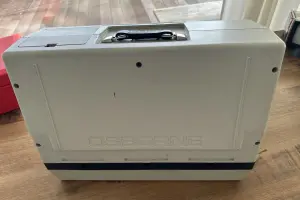
- Weight — About 24.5 pounds (11.1 kg) — heavy but luggable in its case
- Power — AC-powered only (no battery)
- WordStar (word processor)
- SuperCalc (spreadsheet)
- MBASIC and CBASIC programming languages
- CP/M itself
- Plus utilities and other tools
Commercial Success and Impact
Priced at $1,795 (equivalent to roughly $6,200 today), it was far cheaper than comparable systems when factoring in the included software. Sales exploded: the company hit peaks of 10,000 units per month, reached $1 million in monthly revenue quickly, and by 1982–1983 had annual sales in the hundreds of millions. It appealed especially to business travelers, journalists, and early mobile professionals who needed to take work on the road.
The Osborne 1 proved portability was viable and helped pave the way for future laptops (though true laptops with flat screens, batteries, and lighter weight came later in the mid-1980s with machines like the Compaq Portable and eventually the IBM PC Convertible or Apple PowerBook line).
The Fall of Osborne Computer Corporation
The company's dramatic collapse became a classic Silicon Valley cautionary tale. In early 1983, Adam Osborne prematurely announced the Osborne Executive (an improved successor with a larger screen) and other upcoming products during a public appearance. Customers stopped buying the Osborne 1 in anticipation of the better model — a phenomenon now called "Osborne effect" or pre-announcement sales-killing.
Combined with production issues, competition from newer machines (like the IBM PC and Compaq Portable), and financial mismanagement, orders dried up. By September 1983, Osborne Computer Corporation filed for bankruptcy — one of the fastest rise-and-falls in early PC history, going from boom to bust in under three years.
Legacy
Despite the company's failure, the Osborne 1 demonstrated that:
- Portable computers could be mass-market products
- Bundling software could make hardware more attractive
- Aggressive pricing and marketing could disrupt established players
Comments (0)
No comments yet. Be the first to comment on Smiggy's article!
Leave a Comment